
Chimney Liner Repair in Wellesley, MA
Independent local contractors · Price explained before any work starts · Boston and 20 nearby cities and towns
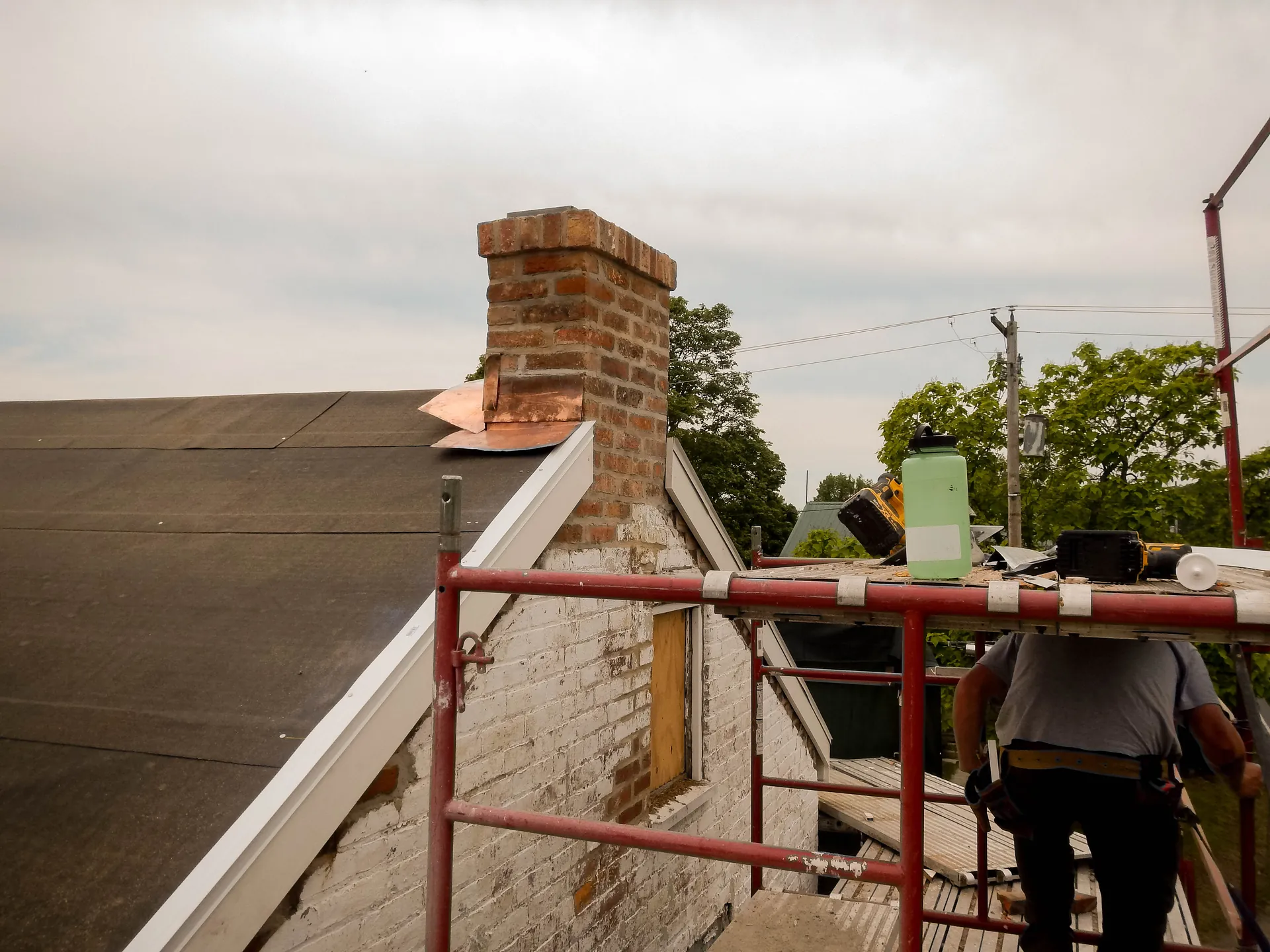
Need chimney liner repair in Wellesley? The liner is the inner surface of the flue. In older houses it is often clay tile, and tile can crack or shift over the years. A damaged liner can let heat and gases reach the masonry, which is why a camera inspection is usually the first step. Repair options depend on what the camera shows and what the chimney serves.
At a glance Who does the work: an independent local chimney contractor · Price: explained before any work starts · Area: Wellesley and nearby towns · How: call (617) 751-6200 or send the short form
A local view of chimneys in Wellesley
Wellesley is a college town west of Boston, with centers at Wellesley Square and Wellesley Hills. Wellesley is known for substantial colonials, Tudors and shingle-style houses on generous lots, especially around Cliff Road and Wellesley Farms. Large houses like these commonly have two or three chimneys and half a dozen flues.
Tudor-style homes feature tall decorative stacks with patterned brick and multiple clay pots. Those exposed tops take the weather from every side, so crowns and pots should be checked for cracks.
With several fireplaces in one house, it is typical for one or two to get regular use and the others almost none. Unused flues still collect moisture, debris and the occasional nest.
Slate and cedar roofs are common on the older estates, and working around them takes care and the right equipment.
How to tell it is time to ask for help
If any of this sounds familiar, stop using the fireplace or appliance and ask for a technician:
- A camera inspection that shows cracks, gaps or missing tile
- Smoke or odor entering the house
- A new or changed appliance connected to an old flue
- Water or soot staining on interior walls near the chimney
- Chimney fire history
- A flue that was never lined
The root causes behind chimney liner repair calls
Sometimes the liner is simply wrong for the job, or absent. Many chimneys built before liners became standard practice have none. Others were lined for an appliance that has since been replaced, so a flue sized for an old boiler or an open fireplace now serves equipment that needs something smaller. In those cases relining is about matching the flue to what it vents.
Clay tile liners are durable but brittle. They are stacked in sections with mortar between them, and they crack when heated or cooled too quickly. A chimney fire is the classic cause, but so is years of ordinary thermal cycling. The mortar between tiles also erodes, leaving gaps. Once tiles crack or shift, the flue no longer contains heat and gases the way it should.
What chimney liner repair involves
Liner work nearly always begins with a camera inspection, so the technician can show you the damage and its extent. The options then depend on the liner and the appliance. Minor joint gaps in clay tile can sometimes be repaired with a resurfacing system applied inside the flue. Wider damage, or a change of appliance, usually leads to relining, most often with a stainless steel liner sized to the appliance and commonly insulated. Occasionally damaged tiles are broken out first to make room. Afterwards the top is sealed with a plate and cap, and the appliance connection is remade.
Do this first: a homeowner checklist
- Stop using the fireplace or applianceTreat the fireplace or stove as out of service for now. Most chimney problems do not get worse while the flue sits cold and unused, but many get worse quickly when heat and smoke are added again.
- Smoke, gas or a CO alarm: leave firstA sounding carbon monoxide alarm is not a nuisance to silence. Leave the house with everyone in it, then call the emergency number or the gas company from outside. Come back to the chimney question once the house is declared safe.
- Do not light a test fireSkip the experiment with newspaper or a starter log. If an animal, a nest or fallen tile is in the flue, a fire will not clear it. It only adds heat and smoke to a flue that cannot vent.
- Note what you see, hear and smellWrite down what happened and when: smoke in the room, a smell, a stain, a noise, pieces in the firebox. Note the weather too. Rain, wind and cold snaps are useful clues when a technician is working out the cause.
- Send a requestFill in the short form with what you noticed and where you live. A local chimney technician gets the request and calls. That call is the moment to ask how soon a visit is possible.
What happens after you send a request
- Send the short requestChoose the job type, your town and leave a name, phone number and ZIP code. Add a line about what the chimney serves if you know. It takes about a minute and you describe the problem once.
- We pass it to a local contractorAn independent chimney contractor covering Wellesley receives what you sent. That contractor, not this website, is the business that does the work and is responsible for it.
- The technician calls youA technician phones you back to go over the details. Have a few facts ready: the appliance, the fuel, the last sweep if you know it, and what made you send the request.
- They look at the chimney and explain the priceOn site, the technician looks at the chimney, often from the firebox and from the top, and explains what was found. You hear the options and the price before any work starts.
- The decision is yoursIf the plan and the price make sense to you, you approve it. If they do not, you are free to say no. There is no obligation attached to asking a contractor to look.
What to expect when the technician comes
For repair work the first visit is usually an assessment, not the repair itself. The technician looks at the damage, works out where water is getting in and decides how the chimney can be reached safely. Tall stacks and steep roofs may need staging, and that affects planning. You then get the options and the price. Masonry work is commonly scheduled around the weather, because mortar and crown material need mild, dry conditions to cure. Ask what the timeline looks like for your job.
When it cannot wait
How soon a technician can come depends on the contractor's schedule, the season and the weather, so this site does not promise a time. Ask on the callback. If smoke came into the house, a carbon monoxide alarm sounded or you think there was a chimney fire, say so in the first sentence. Those are the situations a contractor will want to hear about first, and the chimney should stay unused until it has been looked at.
Winter visits are possible, and sometimes necessary. A fireplace that starts smoking in January or an animal that moves in during a cold spell cannot wait for May. Sweeping and camera inspections can generally be done in cold weather, though snow and ice on the roof may limit what a technician can safely reach from the top. Spring is then the moment to check what winter did: look for fresh cracks, flaked brick and new stains after the thaw.
Chimney Liner Repair in Wellesley? Talk to a technician.
Call (617) 751-6200What affects the price of chimney liner repair
We do not publish prices for chimney liner repair. A fair price comes from seeing the flue, the masonry and the roof, so the contractor quotes after looking. When that quote arrives, expect it to depend on:
- Liner type and condition
- Flue size and chimney height
- Which appliance the chimney serves
- Number of bends and access to the flue
- Whether other masonry repairs are needed first
When you compare quotes, compare the same scope: the same liner type, the same amount of repointing, the same inspection level. A low opening number with extras added later is not a lower price.
DIY or technician? A straight answer
There is little hands-on work here for a homeowner, but there is useful observing. Check the cleanout door at the base of the chimney and the firebox floor for flakes or shards of tile. Note any new smoke smell, staining on walls near the chimney or condensation around a boiler flue pipe. Keep the paperwork from past inspections. Choosing a liner type and size, and installing it, is technician work, because a mismatched liner can cause draft and condensation problems.
Hearth brands local contractors commonly see
Chimney contractors around Boston commonly work on flues that serve stoves, inserts and fireplaces from the makers found in local homes, including Vermont Castings, Hearthstone, Harman, Quadra-Fire, Lopi and Napoleon. If you can see a name on the appliance or its data plate, mention it in your request. Mass Chimney Sweep is not affiliated with any manufacturer.
Care that fits a New England chimney
- Keep the flue capped so rain cannot soak the liner.
- Have the flue checked whenever a boiler, furnace, stove or insert is replaced.
- Sweep regularly so creosote does not fuel a liner-cracking chimney fire.
- Warm a cold flue gradually instead of starting with a roaring fire.
- Ask for a camera inspection if tile fragments ever appear.
Covering all of Wellesley
Wellesley requests include homes in Wellesley Square, Wellesley Hills, Wellesley Farms, Cliff Road and the Dana Hall area. Older houses and newer ones are both welcome, and so are multi-family buildings where the chimney is shared. Neighbors over the line in Newton and Needham can use the same short form.
How Mass Chimney Sweep works
- A referral service, said plainlyMass Chimney Sweep connects homeowners with independent local chimney contractors. It is not the company that does the sweeping, inspection or repair, and it says so on every page.
- One short requestJob type, town, name, phone and ZIP code. You describe the chimney once, without calling around or filling in a long questionnaire first.
- Local, independent contractorsThe request goes to a chimney contractor who works in Wellesley. There is no national call center between you and the person who looks at the flue.
- A look before a priceThe technician looks at the chimney and explains the options and the price before any work starts. You are not asked to agree to anything unseen.
- No invented pricesYou will not find a made-up price list or a teaser rate here. Chimneys differ too much for that, so the contractor quotes after seeing yours.
- No time promisesThis site does not control any contractor's calendar, so it does not promise arrival times. Ask the technician on the callback and say if something is urgent.
Related pages
Looking for something more specific? These pages cover the services, towns and questions people ask about most:
- Chimney Liner Repair (all of Greater Boston)
- Chimney sweep, inspection and repair in Wellesley
- Chimney Sweep and Cleaning in Wellesley
- Chimney Inspection in Wellesley
- Chimney Repair in Wellesley
- Creosote Removal in Wellesley
- Chimney Caps and Animal Removal in Wellesley
- Chimney relining in Wellesley
- Cracked chimney liner in Wellesley
- Chimney liner for an oil-to-gas conversion in Wellesley
- Fireplace insert liner in Wellesley
- Flue tile repair in Wellesley
- Stainless Steel Chimney Liner Installation
- Clay Flue Tile Repair
- Boiler and Furnace Flue Liner
- Wood Stove and Insert Liner
- Does my chimney need a liner?
- Clay tile or stainless steel liner: what is the difference?
- Why does my new boiler need a chimney liner?
Send the request in about a minute
The next step takes about a minute. Tell us the job and your town, and an independent local chimney technician calls you back to talk it through.
Questions from Wellesley
What do the pieces of tile in my fireplace mean?
Thin flakes or shards of orange-brown clay usually come from the flue liner. They suggest the tile surface is breaking down or a tile has cracked. Stop using the flue and ask for a camera inspection, which shows where the pieces came from and how serious it is.
How do clay tile and stainless steel liners compare?
Clay tile is the traditional liner in masonry chimneys and lasts well when it stays dry and intact, but it is hard to repair in place. Stainless steel is the usual choice for relining because it can be sized to the appliance and installed through the existing flue.
Does a liner need insulation?
Often it is recommended, and for wood-burning appliances it is commonly part of the liner's listing requirements. Insulation keeps flue gases warm, which improves draft and reduces condensation and creosote. The technician can explain what your appliance and chimney call for.
Should fireplaces I never use in my Wellesley home be inspected?
Yes, from time to time. An unused flue can still let in water or animals, and you will want to know its condition before someone decides to use it.
Is this the company that does the work?
Mass Chimney Sweep is a referral service that connects homeowners with local chimney contractors. The sweeping, inspection or repair is done by the independent contractor who takes your request, not by this site.
Do you give prices online?
No. The cost depends on the chimney, what it serves, how it is reached and what the technician finds, so the contractor quotes after looking and explains the price before any work starts.
Can I just ask for someone to look at it?
Yes. Choose the inspection job type and say that you want the chimney looked over. The technician tells you what they find and what, if anything, needs doing. You are free to stop there and think about it.
Is a carbon monoxide alarm enough protection?
An alarm is essential, but it is a warning, not a fix. It tells you gases are already in the room. A clear, sound flue is what keeps them out in the first place. Have working alarms on every level and have the venting checked as well.
What is the difference between a sweep and an inspection?
A sweep removes soot and creosote from the flue. An inspection assesses the condition of the chimney, sometimes with a camera. The two are often done together, and a sweep usually includes a basic look. Tell the technician why you are asking so the visit fits.
My building has several units. Who arranges chimney work?
It depends on who owns the chimney. In a condo it may be a common element managed by the association; in a rental building it is the owner. Check before you request work, because the contractor will need approval from whoever is responsible.